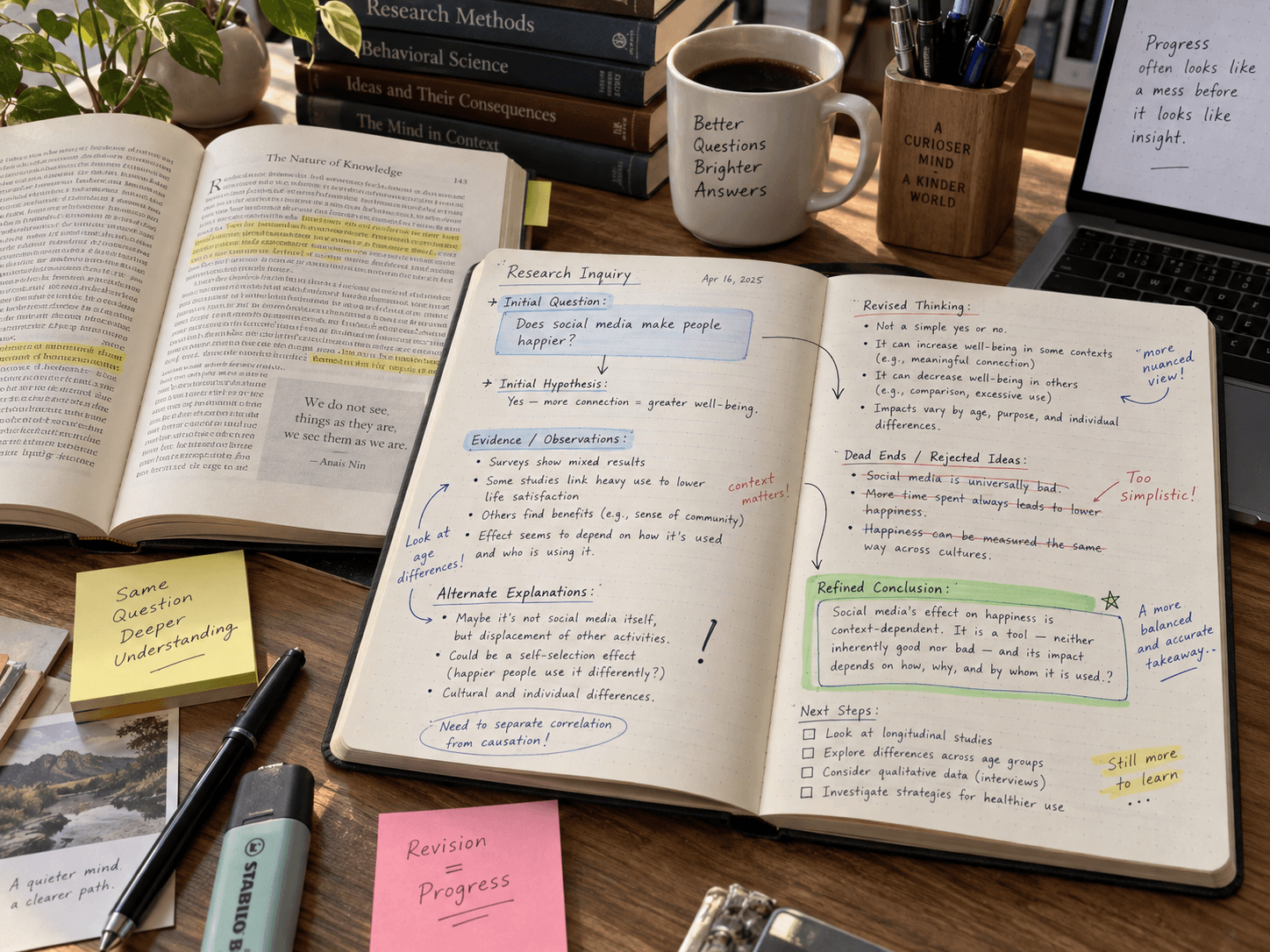
To turn an AI answer into a research trail, save the question, the claims you investigate, the sources you actually read, and the changes those sources make to your conclusion. A saved answer preserves what the model said. A study trail also explains what you checked and why you accepted, narrowed, or rejected it.
For a student returning to an essay or a study group meeting next week, that distinction matters. You should be able to resume the inquiry without asking the model to reconstruct what happened.
In brief: Keep four parts together: the original question, the provisional AI answer, your checked source records, and your revised conclusion with open questions. In Plurilore, preserve the exchange before leaving Chat, follow Sources consulted into the Library, and export important local notes for backup.
Another reader needs to be able to locate the evidence and follow your reasoning. They do not need to reproduce the same AI wording or agree with your final interpretation.
Give them enough information to distinguish three things: what a source says, how someone interprets it, and what you conclude. A bibliography alone does not show those connections. Neither does a transcript full of references you have not opened.
The University of Utah's AI information guide recommends independently checking citations and keeping critical judgment with the reader. This workflow carries that check into the research record: it preserves the result, including corrections and unanswered questions.
If you have not checked the citations yet, use the citation-verification checklist. Here we focus on making the checked work possible to revisit.
Write the research question at the top of a note. Include the date, tool, selected traditions, and the model if its name is visible. Record only what you know; do not guess a model version.
Save the relevant exchange, including the source list, before navigating away. If a follow-up changes the question, keep both versions. “What does this passage teach?” and “How has this passage been interpreted?” require different evidence, even if they occurred in the same conversation.
Label the saved answer AI working material. That label keeps a fluent first draft from becoming your conclusion merely because you copied it into a note.
List the assertions that matter to your question. Use simple identifiers such as C1 and C2 if there are several. You are creating a way to refer back to sentences, not assigning them scientific scores.
Start with the claims that could change your conclusion. If you keep a quotation, a claim about a text, and a claim about community practice, each needs its own evidence. One scripture passage may address the textual point without establishing how people practice today.
Our guide to comparing religions is a useful starting point when the initial question assumes two traditions have one shared answer. Fixing the question now can save many pages of irrelevant notes.
Record the title, passage locator, translator or editor, available edition details, and a usable link. Add the date checked and the surrounding section you read. For a printed book, include the edition and relevant page numbers as well as the work's own divisions where available.
Write a brief paraphrase in your own words. Label it as a paraphrase. If exact wording matters, preserve a short, accurately attributed quotation within the source's usage terms and your project's requirements.
Then write which claim the source supports. “Relevant to C1” is a start; “supports C1 only if I remove the claim about all communities” is better. The second note tells your future self what still needs doing.
When evidence changes your answer, keep a short account of the change. For example: “Removed the claim about contemporary practice; the source is a translated passage, not a study of this community.”
Retain rejected claims in working notes if they explain the direction of the research. Keep them clearly marked so they cannot be mistaken for supported material when you return. You do not need to preserve every abandoned sentence, only the decisions that affect the argument.
This record also helps collaborators. They can see that an apparent omission was investigated rather than accidentally overlooked.
End the note with three short paragraphs: What I can say, What remains uncertain, and What to read next.
Be concrete in the last paragraph. “Read more about Christianity” is too broad to restart a session. “Find a named commentary on Matthew 5:43–48 that discusses the passage's relation to community boundaries” gives you a task you can pursue.
Follow your institution's rules for disclosing AI assistance. The University of Hawaiʻi's responsible AI guidance advises students to check permission with their instructor and acknowledge AI use where required. A careful source trail does not override the rules of an assignment.
This is a constructed example showing the shape of a research note, not an account of a live AI session.
Question: How does Matthew 5:43–48 explain the instruction to love enemies?
Provisional claim to check: The passage treats loving enemies as ordinary reciprocity: treating others well so they treat you well in return.
Source read: Matthew 5:43–48, World English Bible, accessed September 14, 2026. Record “World English Bible” as the version; do not invent a print edition year for this web text.
Textual observation: The passage commands enemy-love and prayer for persecutors, points to the Father's giving of sun and rain, and asks what distinguishes loving only those who love you. The proposed reciprocity explanation does not fit that argument.
Revised conclusion: In this passage, enemy-love extends beyond mutual affection and is related to the Father's action. This is a reading of the cited passage, not a description of every Christian interpretation or practice.
Open question: How have named interpreters connected the passage to action in conflict? Begin with the sources in our enemy-love deep dive, then read the relevant commentary itself before citing its interpretation.
The note is short, but it preserves the important change. Someone reading it later can identify the initial mistake, reopen the passage, and decide whether the correction is justified.
Plurilore's current Chat interface offers Save as local note for an individual answer and an export control for the current exchange. Saving the whole exchange is useful when your prompt and follow-up questions explain how the answer developed. Saving an individual answer requires you to add the question yourself.
Source references supplied with assistant messages are included in the note export. Check the saved note and add missing edition details manually. The export carries the material you received; it does not mark sources as verified or decide which sentences they support.
If you prefer to collect working fragments first, Capture to scratchpad provides a temporary working surface. Move the material you intend to keep into an organized note and make a backup when the record is ready.
Expand Sources consulted, open the relevant Library passage, and record its URL alongside the passage reference. Read the surrounding text before writing the source observation.
The Library requires sign-in. If your collaborators cannot access the same workspace, also record an accessible external edition when one is available. Name any difference in translation; do not present the external wording as an exact copy of the Library edition without checking it.
Some bibliographic details may require the agent's source guide or the original publication. Do not fill those gaps from the generated answer alone.
You can use Atlas to explore related topics and open their evidence. Put a useful connection into your What to read next paragraph, then inspect the passages before adopting it as a conclusion.
Atlas relationships are generated from the available corpus. A mapped connection helps you find material to investigate; it does not establish doctrinal agreement. Record the sources you followed, not just the topic label that led you there.
Plurilore's Notes system stores writing in the browser on the current device. Notes do not automatically synchronize across devices, and clearing browser data can remove the local copy. Use the export action after substantial work and store the export somewhere you can retrieve it.
Chat is also ephemeral: it is not a server-side conversation archive you can reopen later. Saving selected material and exporting local notes are deliberate steps in this workflow.
At the next session, read your conclusion and open one of its supporting references. Check that you can still locate the passage and tell which wording belongs to which translation.
If a source has moved, update its link while preserving the work and edition details. If new evidence changes your conclusion, add a dated revision rather than silently turning the old note into a different argument.
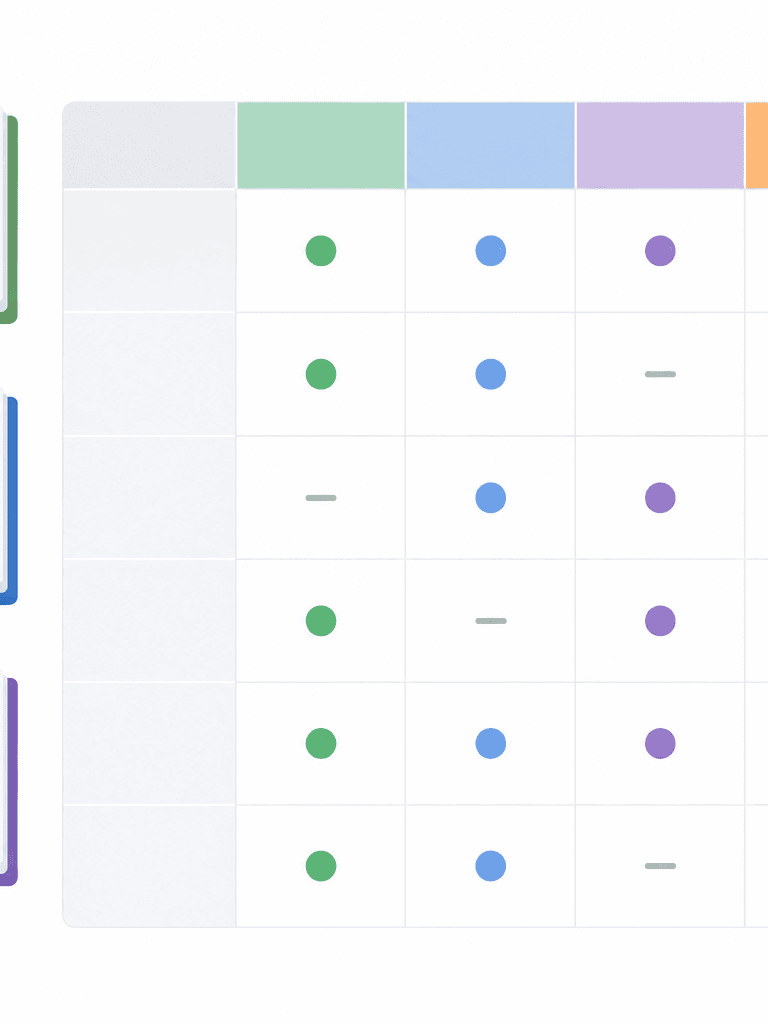
When you are ready to compare several source records, organize them under one explicit question. Keep each source's context and the differences visible before writing a shared summary.
It is one part of the trail. Add the sources you opened, the editions you used, your support checks, and the conclusion you wrote after reading. Without those additions, the transcript records an exchange but leaves the evidence and reasoning unexamined.
No. For this workflow, they need to be able to find your evidence and follow the reasoning from source to conclusion. If your research is about AI behavior itself, you will need a separate experimental record covering the system, settings, prompts, outputs, and testing conditions.
No. A plain document or notebook can preserve a question, references, corrections, and next steps. Plurilore provides connected reading and note-taking surfaces, but the method works with printed books and ordinary files. The important choice is to keep the evidence attached to the conclusion.
Mark it as unresolved and record where you looked. You can continue exploring, but do not turn an unconfirmed translator or date into a finished citation. Check a title page, publisher record, or library catalog, or use a different identifiable edition and recheck the wording.
Take one answer you want to keep. Save the question, open one source, and record one correction or supported conclusion. Finish with the next source you need and export the note. When you return, begin with that source rather than asking the model to remember your research.
Compare ahimsa in Jain, Hindu, and Buddhist sources through vows, intention, living beings, compassion, karma, and the limits of nonviolence.